


Rotterdam
Cube Houses Rotterdam: why this city is the setting of my thrillers
By Ard Breure · Last updated 21 August 2026
Introduction
Rotterdam is the setting of my thriller series — this is the city as I know it. Cube Houses Rotterdam are one of the reasons why: yellow homes on pylons, forty-five degrees off true, a forest of architecture above a traffic artery. It photographs brilliantly. That is not the whole story.
Rotterdam is a city that chose experiment over nostalgia after its centre was destroyed. The Cube Houses are a late-1970s answer to the cool, large-scale reconstruction architecture that followed. The design wanted to be what reconstruction had left out: a village inside the big city.
What are the Cube Houses?
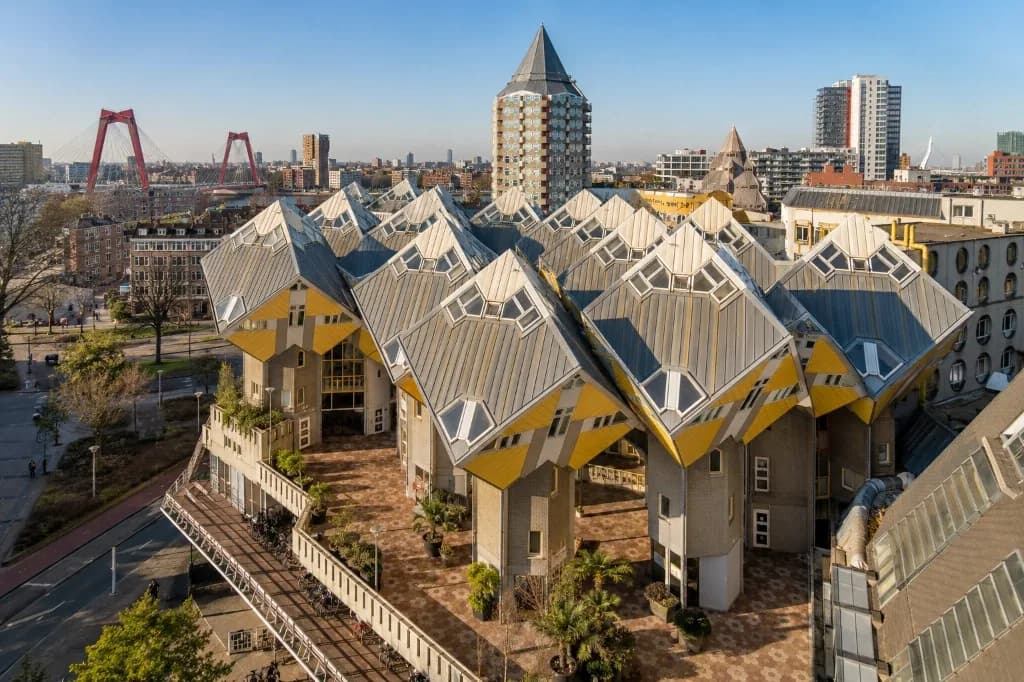
The Cube Houses, also known as the Blaakse Bos, stand at Blaak station, right beside Markthal and above the broad traffic artery called the Blaak. They were designed by architect Piet Blom and built between 1982 and 1984. The architecture and building history of the complex are set out in the Wikipedia article on the Cube Houses.
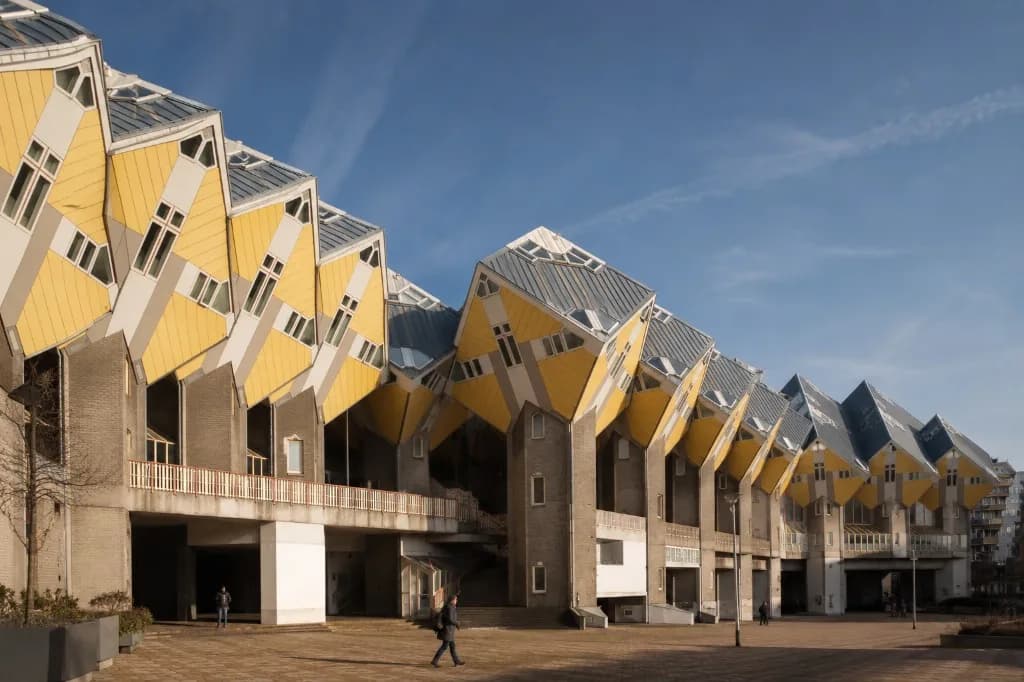
The complex consists of thirty-eight regular cube houses, two so-called super-cubes and a handful of commercial units at ground level. Blom's idea was as simple as it was radical: each home represents a tree, and together they form a forest. The cube is tilted forty-five degrees and rests on a hexagonal pylon, the trunk. That creates a public space beneath the homes: a pedestrian route connecting the Oude Haven to the city centre, free of the car traffic below.
Visitor information often treats the complex as an amusing curiosity. The exterior is playful, but this is first of all a working residential building. People live behind those tilted walls.
What makes the Cube Houses special?
The first thing most people do is try to work out how the space inside functions. From outside you see windows angled towards the ground and windows angled towards the sky. Inside there is not one straight wall. Everything leans.
A cube has three levels, and Blom gave them names that belong to his forest:
- The street house. The lowest floor: living room with open kitchen, its windows angled downwards, into the street and the promenade.
- The sky house. The middle floor: bedrooms and bathroom, in the wide centre of the tilted cube.
- The tree top. The point at the top: a three-sided pyramid with windows all around, often used as a garden room, study or extra bed, looking out over the city.
The Cube Houses are special because they are a protest. Blom wanted to bring a village character back to businesslike post-war Rotterdam: a place where people meet on a promenade, safe from the traffic rushing underneath. This is structuralism at its most visible, architecture that refuses to conform to the standard box.
Can you look inside a Cube House?
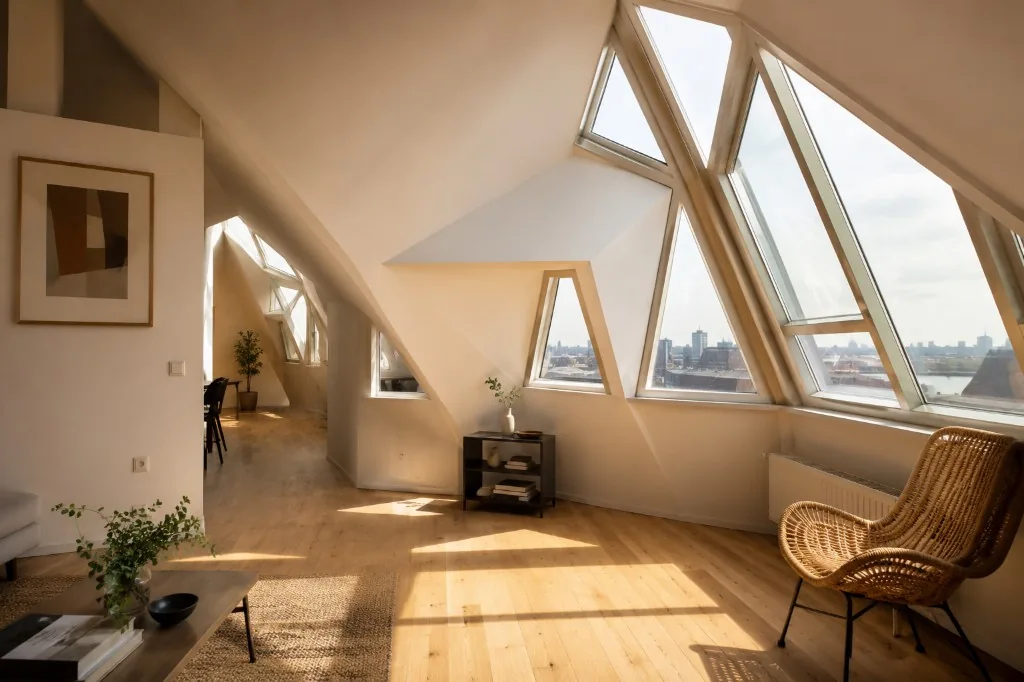
Yes, and if you are here anyway, it is really a requirement. Because these are ordinary homes, you cannot simply ring someone's doorbell. That is what the Kijk-Kubus, the museum house on the Overblaak, is for.
That cube is fully furnished and open to the public, with custom-built furniture made specifically for the sloping walls. You experience two things there that you cannot see from outside: how much bespoke work it takes to put a cupboard against a forty-five-degree wall, and how surprisingly light and spacious it is inside, despite the seemingly impractical design.
Are the Cube Houses Rotterdam worth it?
Yes, even if you normally walk straight past architecture. The visit is compact. You do not need hours for it, and it sits literally on the route between Blaak station and the Oude Haven.
It is less worthwhile if you are unsteady on your feet or uncomfortable in tight spaces: the Kijk-Kubus has steep, narrow stairs and no lift. But for anyone who wants to understand how Rotterdam claims space and dares to experiment, this is a required stop. Where Markthal across the square shows how the city builds in the twenty-first century, the Cube Houses show how it thought about living together in the 1980s.
How long do you need?
Twenty to thirty minutes is enough to walk the promenade on the Overblaak, take photographs and let the architecture settle. If you also want to visit the Kijk-Kubus inside, add roughly thirty minutes.
You do not need half a day. The Cube Houses are the perfect middle course in a day in Rotterdam, easy to fit in before or after lunch.
What to see near the Cube Houses
Almost everything worth combining lies a stone's throw away.
- Markthal. MVRDV's arch stands directly opposite the cubes: the logical place for coffee or lunch after your visit. Our guide to Markthal tells you what to see and eat there.
- The Oude Haven and the Witte Huis. Take the stairs from the Cube Houses straight down into the old harbour. There you will find historic ships, waterside terraces and the Witte Huis, long regarded as the first skyscraper in Europe.
- The Laurenskerk. Five minutes on foot stands the late-Gothic church, one of the few buildings in the centre that survived the bombing of 1940.
- Market on the Binnenrotte. On Tuesdays and Saturdays you step from the cubes straight onto the largest outdoor market in the city.
The Cube Houses and the architecture of Rotterdam
On 14 May 1940 the bombing emptied the middle of the city. What followed was not a stone-by-stone return of the old streets, but a decision, repeated for decades, to treat the open ground as a place to invent. The first answers were businesslike and large in scale: the Lijnbaan, the Groothandelsgebouw, the straight lines of the reconstruction.
The Cube Houses are the reaction to that. Blom did not build a street but a forest; not a block but a village on pylons. Where the reconstruction pulled functions neatly apart, he stacked living on top of walking, and walking on top of driving. The same argument returns thirty years later in Markthal across the square, where private housing is bent into a public plaza. Two buildings, two generations, the same question: how do you make a centre when the centre is gone?
If you want that history in another form, read it. Our reading list of books about Rotterdam gathers the titles, including a reconstruction guide covering a hundred buildings from those years. It does not replace standing under the cubes. It tells you why they could land here and nowhere else.
Books about Rotterdam
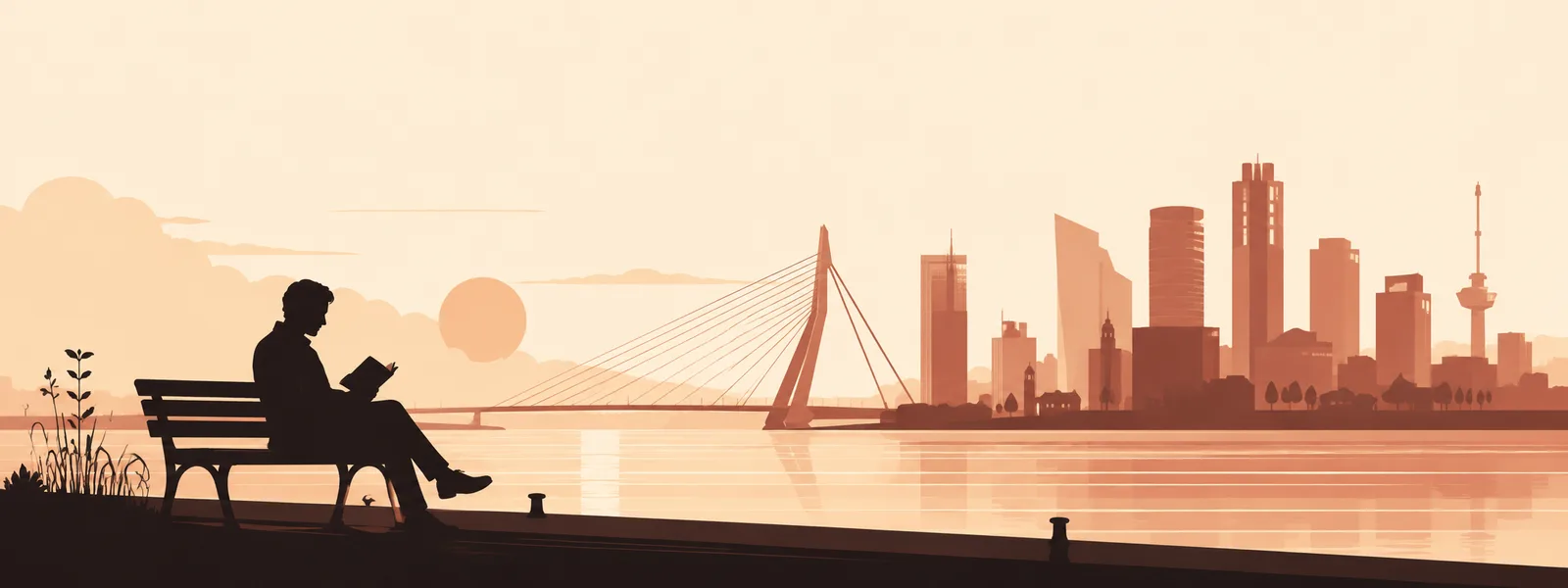
If the Cube Houses leave you with questions about how this city thinks, look further in its literature. Start with the reading list of books about Rotterdam from Breure Media: Karakter by Bordewijk for the city before the bombing, Jules Deelder for its tone, Hugo Borst for football and identity, and the reconstruction guide for the skyline you are walking through. Most of these titles are Dutch, so the list itself is in Dutch.
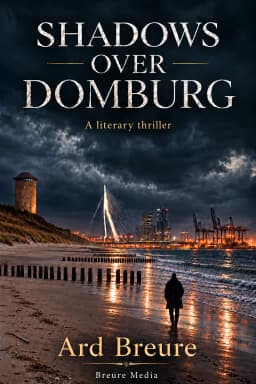
My own novel, Shadows over Domburg, is a literary thriller due in January 2027. The story begins on a Zeeland beach and moves deep into the dark logistics of the Rotterdam harbour. It belongs on that list because Rotterdam is not a backdrop in it, but a character with a part to play.
Practical information
Address: Overblaak 70, 3011 MH Rotterdam, the address of the Kijk-Kubus.
Reaching the Cube Houses by public transport
Blaak station sits literally under and beside the complex, served by train, metro (lines A, B and C) and tram. From Rotterdam Centraal it is a short ride, or a walk of around twenty-five minutes through the centre.
Parking near the Cube Houses
A large underground car park lies beneath the neighbouring Markthal. Alternatives nearby are the garages at the Oude Haven and the Kiphof. Bicycles can be parked free of charge in the municipal facility next to Blaak station.
Kijk-Kubus opening hours and tickets
- The museum house is open daily, generally from 10:00 to 18:00; hours may be longer in the summer months.
- Tickets are bought at the door. Expect around €3.50 for adults, with a reduced rate for students and visitors over 65. Payment is usually by card only.
- The outdoor space and the promenade are freely accessible day and night, at no cost.
Opening hours and prices can change and vary by season. Check the current details on the Kijk-Kubus page on Rotterdam.info before you set out.
Visitor questions
Frequently asked questions
Yes. This is a piece of architecture you will not find anywhere else at this scale, and the visit is short. Combine it with Markthal and the Oude Haven and you have a complete morning or afternoon in the Laurenskwartier.
Yes, at the Kijk-Kubus on the Overblaak 70. That is a fully furnished museum house, the only cube open to the public without an appointment. The other cubes are ordinary homes with residents; you cannot simply ring a doorbell.
Allow twenty to thirty minutes for the exterior and the promenade. If you also want to see the Kijk-Kubus from the inside, add roughly thirty minutes. Together that is 45 to 60 minutes.
Admission is modest: expect around €3.50 for adults, with a reduced rate for students and visitors over 65. Payment is usually by card only. The promenade under and between the cubes is freely accessible and costs nothing.
Yes. One of the super-cubes houses the Stayokay hostel, which reopened in April 2026 after a thorough renovation. Individual cubes are also offered through rental platforms from time to time.
No. The homes date from the 1980s and are reached by narrow, steep stairs; there is no lift. The outdoor space and the promenade are walkable, though stairs connect them to street level.
Architect Piet Blom designed the complex, which was built between 1982 and 1984. Blom conceived each home as a tree and the whole as a forest, hence the name Blaakse Bos.