Rotterdam
The Port of Rotterdam, seen from the water
By Ard Breure, author of Shadows over Domburg · Last updated 30 August 2026
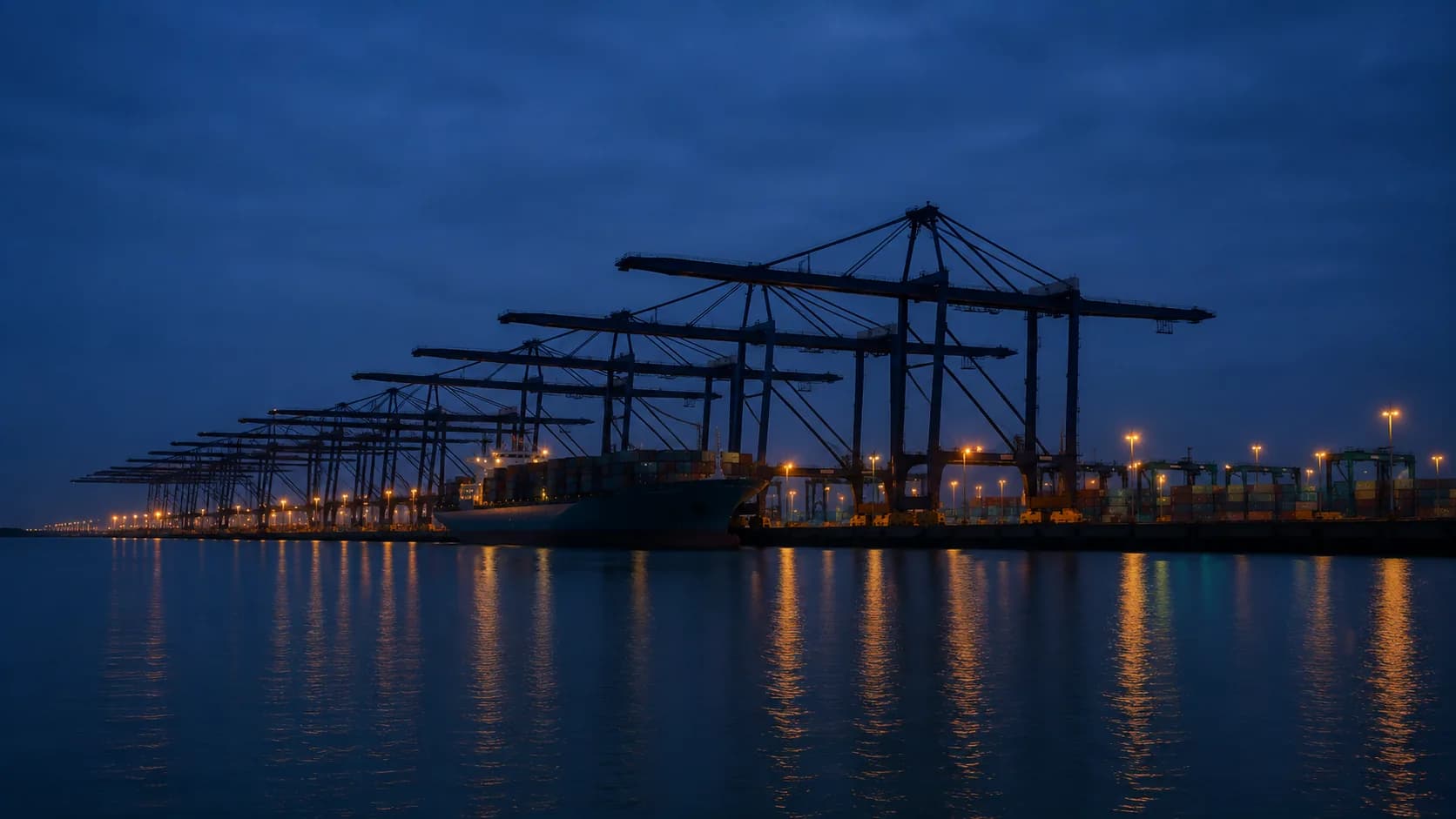
I never had to go looking for the Port of Rotterdam. It was always there.
If you live here your whole life, the port is not a destination. It is the background. You see the cranes along the A15. You see the lorries, day and night, on every road out of the city. You know that somewhere past the last exit there is something larger than the city itself. That feels normal, until you start driving into it.
For seven years I drove a taxi in the port. My passengers were harbour pilots, technicians, people from the oil storage terminals, traders, ships' officers, and train drivers heading to Germany with a freight train, sometimes flown in via Schiphol that same morning. Usually I took them to a station. Sometimes I drove them across the border, or picked them up there.
That work gave me something you cannot buy with a day ticket: access. Most of the port sits behind fences. You are not allowed in, you cannot get in, and that is as it should be. In a taxi I could, because somebody had to be collected and that somebody was not standing at the gate.
What happened inside the car mattered just as much. People talk in taxis. They talk because you are not a colleague, not a manager, not a competitor. You are the man taking them home. Someone needs to get from A to B, and why is none of your business. You don't ask.
Which is exactly how the port itself works, although I didn't see that at the time.
Sixty kilometres of port
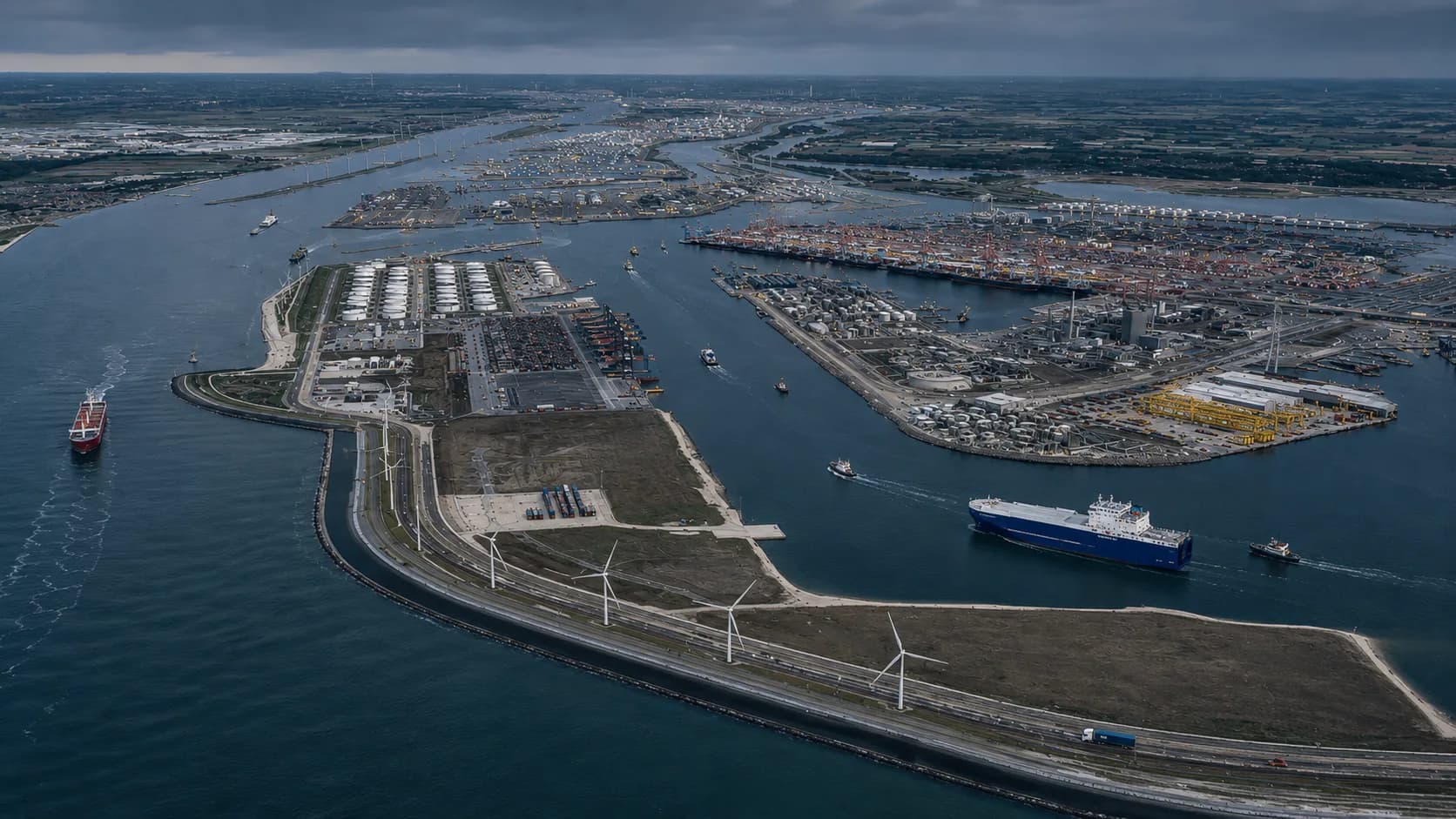
The first thing nobody pictures correctly is the scale. The Port of Rotterdam is not a quay with a few cranes on it. It is an area tens of kilometres long, running from the city docks to far beyond the Europoort, with its own roads, its own bridges, its own railway. You can drive in it for an hour without reaching the edge.
And it is never quiet. That is a misunderstanding I hear often. People imagine a modern port as something silent. The opposite is true. Traffic moves constantly, loading never stops, something is always turning. The port does not pause, not at night, not at weekends, not at Christmas.
I once typed an address into a satnav, back when in-car navigation was still fairly new. The signs on the road said straight ahead, so I drove straight ahead. On the screen beside me I was driving through the North Sea. All blue.
I was on Maasvlakte 2, land raised from the sea bed and so new that the maps had not caught up. That is the port in a single image: it grows faster than the paperwork can follow. You drive across ground that on paper is still water.
What you see from the water
If you want to see this for yourself, the water is the best place to be. From the road you see fences. From the water you see the port.
The standard harbour tour with Spido lasts seventy-five minutes and stays within the city docks. You pass under the Erasmusbrug, along the Kop van Zuid, past the shipyards and the inland barges. That is the tour most visitors take, and as a first impression it is fine.
But the trip to take if you want to see where it really happens is the long one. That one runs down the Nieuwe Waterweg, past the Maeslantkering, past Hoek van Holland, through the Europoort, all the way to the Maasvlakte. That is where the port Europe lives off actually operates.
The difference between those two trips is the difference between a city and a machine.
In the city docks everything is still on a human scale. Warehouses, quays, a crane you can follow with your eyes. On the Maasvlakte the scale stops making sense. The ships are so large that you misjudge distance. A container ship a kilometre away looks close. A crane that appears small is sixty metres high.
A port without people
The two deep sea terminals on Maasvlakte 2 are heavily automated. The port as a whole is loud, but inside those fenced zones there is not a single person.
At APM Terminals, running since 2015, roughly eighty per cent of crane movements are automated, and the manual part is carried out remotely. The automated zones are entirely fenced off, keeping people and machines apart. At the neighbouring Rotterdam World Gateway terminal the picture is the same: fifty automated stacking cranes operated remotely, and fifty-nine automated guided vehicles moving containers around the site.
Those vehicles have no cab. They run at night without lights, because they have no need of eyes. They move in the dark across a site the size of a village, lifting forty-tonne boxes to positions a computer has calculated.
I am not a port man. I drove there, I looked at it, that is all. So I am careful about judging how good this port is, because I don't know the others.
But I once picked up an Englishman whose work took him to ports all over the world. China, America, places whose names I didn't recognise. What exactly he did there I never asked, because you don't. What I do know is what he said, and it stayed with me: that Rotterdam is the most advanced port he knows. So modern, so organised, so well thought through.
When someone who has seen a hundred of them says that, there is something in it.
For a writer there is something else in it too. A port that runs itself is, by definition, a port where nobody is watching.
The box nobody opens
This is where the part that interested me as a writer begins, and what eventually became the engine of the book.
Millions of containers pass through Rotterdam every year. Every box has paperwork, every box has a destination, and the logistics are built so that the box stands still for as short a time as possible. Time is money, and a waiting container costs everyone in the chain something.
Only a small proportion of all those containers actually goes through a scanner. Dutch Customs operate six container scanners in the Port of Rotterdam, spread across different locations, where containers are examined with X-ray equipment. Selection is based on risk analysis: origin, cargo, declarant, patterns. Who gets picked is the output of a model.
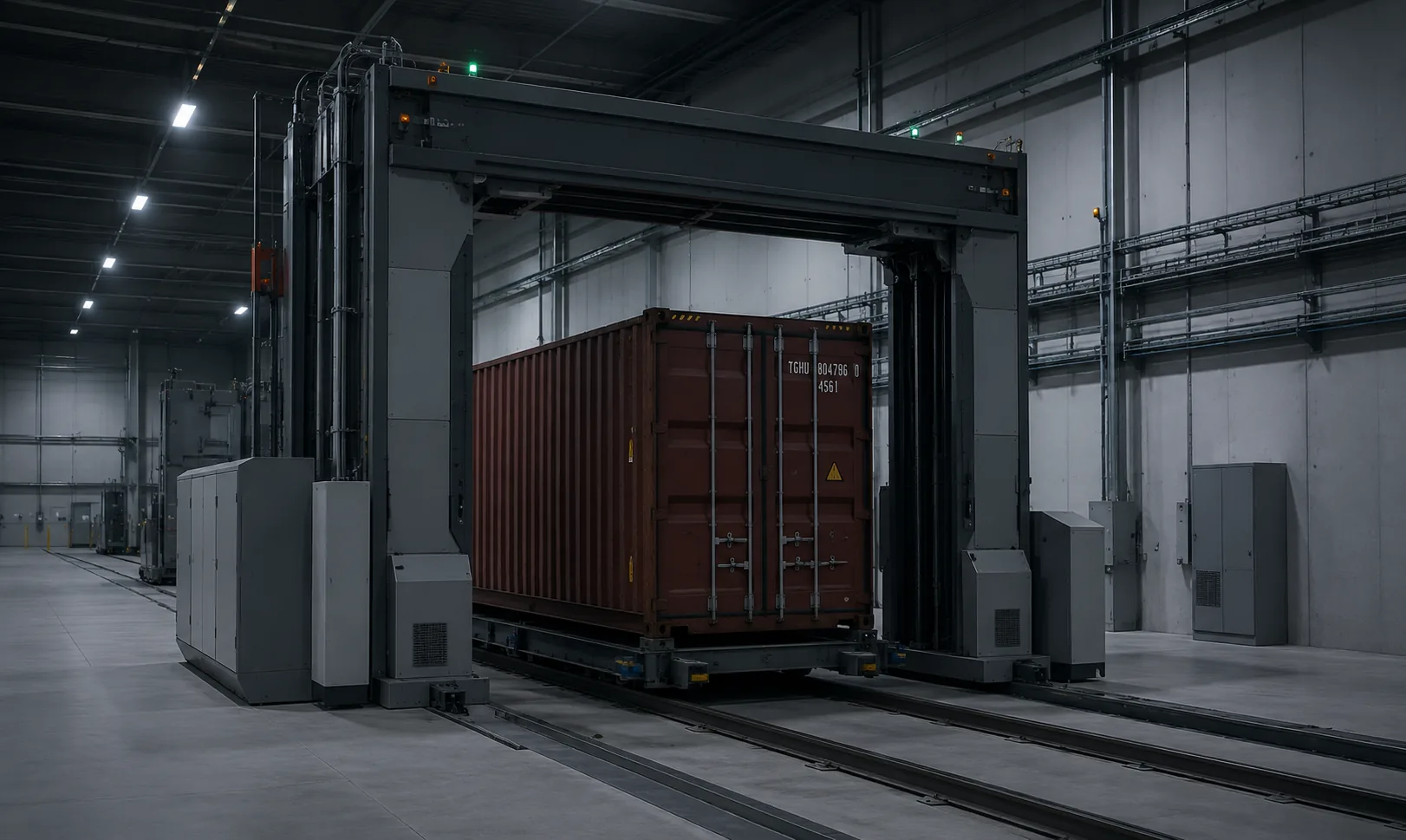
And that model has become smarter in recent years. Algorithms are now used that try to recognise from the scan image itself what is inside a box, looking for drugs, weapons and cigarettes. Not everyone in the field is convinced those algorithms are reliable enough. A scan image is not a photograph. It is a grey mass in which a trained eye recognises shapes, and in which water and pasta look much the same.
What caught me is the gap in between.
Before Customs can scan a container, it stands for a while in a stack among other containers. That gives so-called extractors the opportunity to remove hidden cargo before anything at all has been checked. Customs are working on a solution in which selected containers are moved to a secured area, but that is logistically difficult, precisely because those terminals are so heavily automated. A machine built for maximum throughput does not slow down easily.
And there are drones, with thermal cameras, that see people walking in the narrow corridors between the containers.
Why this became a thriller and not a travel story
According to Europol, more than seventy per cent of all cocaine entering Europe comes in through the ports of Antwerp and Rotterdam. Almost everybody knows that figure by now. What fewer people realise is that a route which works for one thing also works for another. A container makes no distinction about what is inside it.
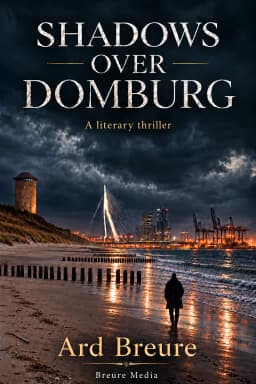
That is the starting point of Schaduwen over Domburg. Not the drugs, because that story has been told. But the same infrastructure, the same paperwork that checks out, the same unspoken agreement that you don't ask what is in the box. Someone needs to get from A to B. Why is none of your business.
And on the other side of the country, a beach in Zeeland where nothing happens, and where for exactly that reason something can happen.
The port and the Zeeland coast are closer together than people think. From the Maasvlakte you look out over the same sea. The water going out past Hoek van Holland runs down past Walcheren. For my protagonist that is not a metaphor but a travel time.
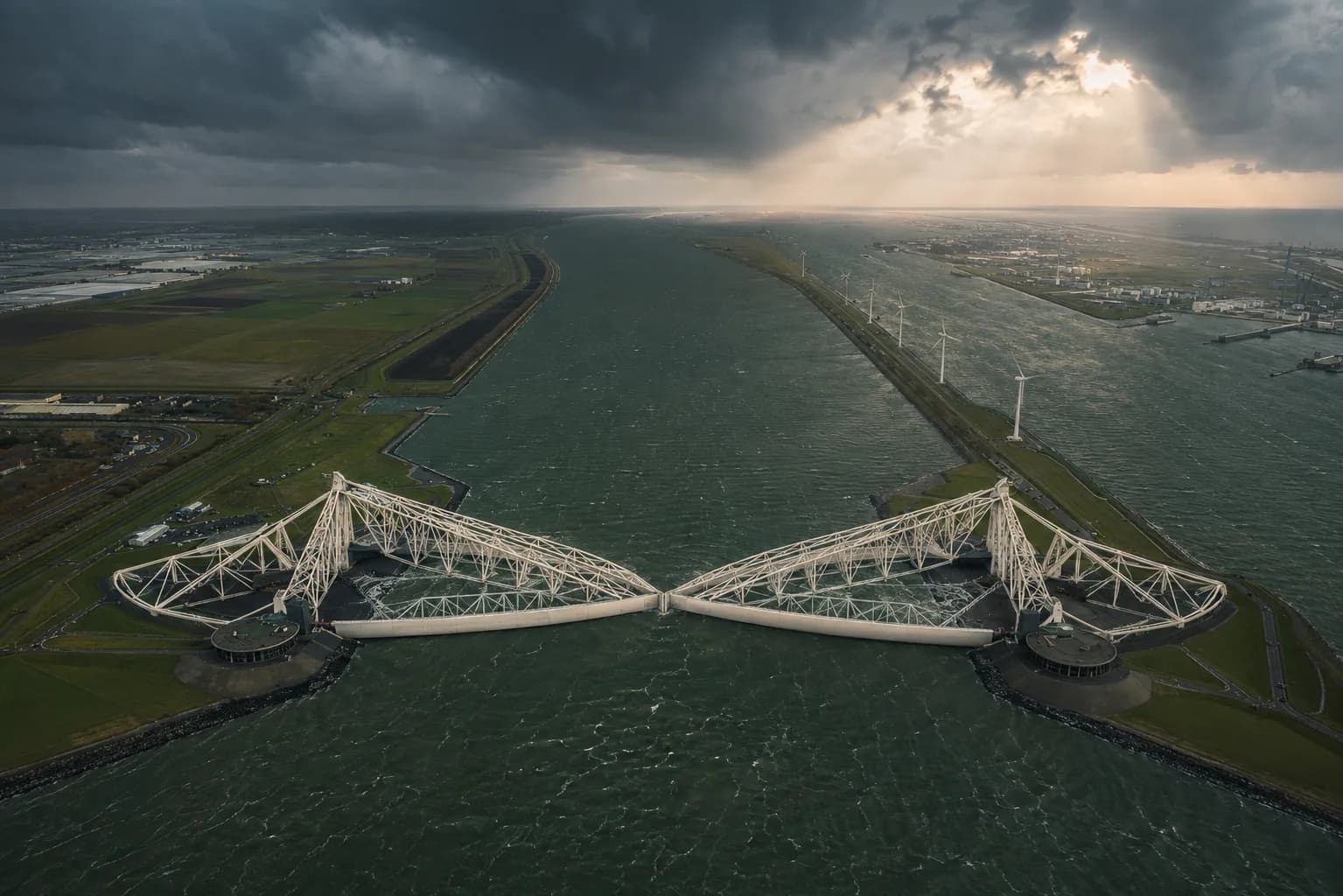
There is a scene in the book set on exactly the stretch of water the Spido sails. I am not going to say which one.
Get the first chapter free
When the tide went out at Domburg that morning, a man was lying on the beach. The watch was still on his wrist. The screen was still lit.
Going to see it yourself
The harbour tour departs from the Boompjeskade, close to Leuvehaven. The short tour runs daily. The long tour to the Maasvlakte only runs in certain periods and takes half a day, so check current times and fares on the operator's own site. I deliberately don't put prices here, because in a year they won't be right.
Three things I would pass on.
Sit on deck, even in the wind, because inside you see half of it.
Take the long tour if you have the choice. The city docks are attractive, but the Maasvlakte is the story.
And don't expect a tourist attraction. This is not a museum and not a viewpoint. It is a working area that happens to be impressive, which makes it better than most things built to impress.
Further reading about the port
I read a great deal about the port for this book, from harbour history to books about the logistics themselves. A selection is in my overview of books about Rotterdam, alongside the novels that capture this city well.
And if you want to see what the other side of the story looks like, the Zeeland side, I wrote about that separately in Domburg: the seaside town behind the book.